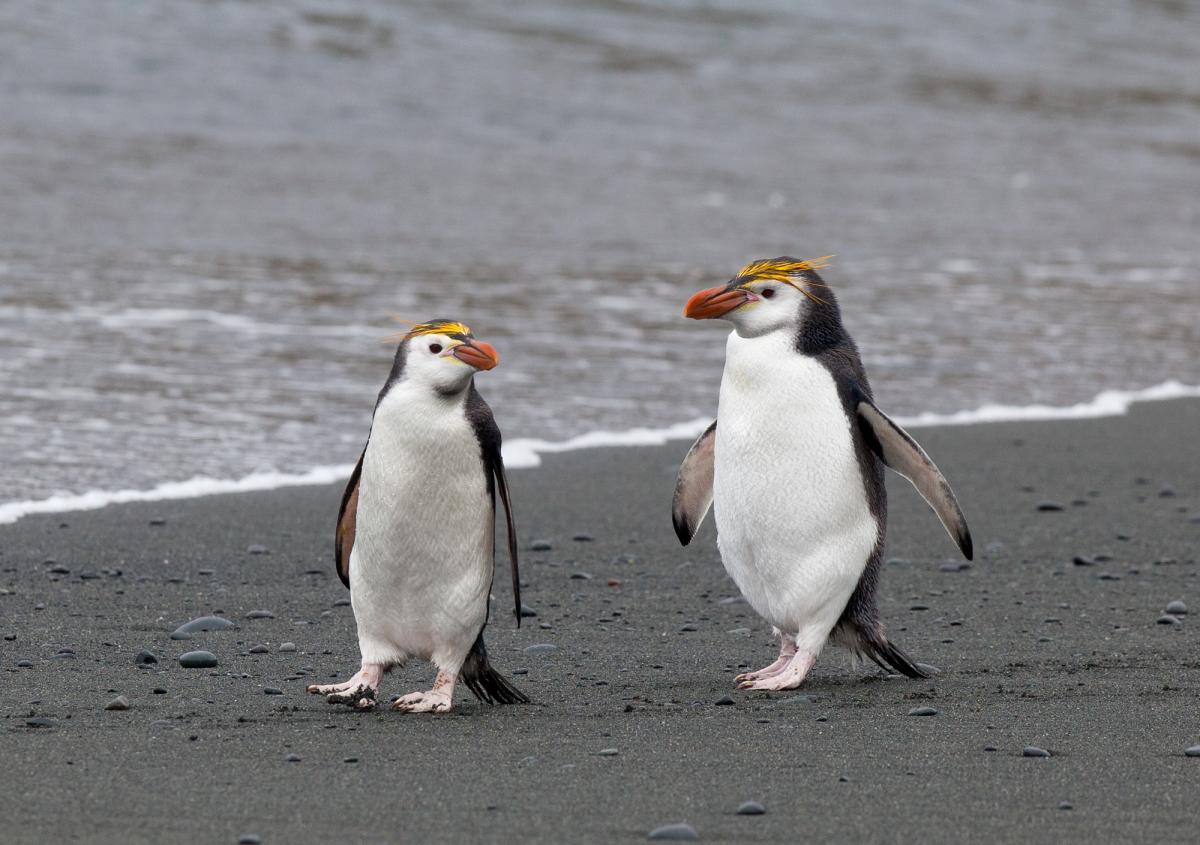
The royal penguin, otherwise known as Eudyptes schlegeli, is a species of penguin found in Macquarie island near Antartica. The species is similar to the Macaroni penguin species and for a long time were actually thought to be the same species, both having yellow hairs on their head, but are in fact quite different.
Royal penguins range from 2-3 feet in height and weigh from 6 to 18 pounds(2.7 to 8.1 kilograms). Unlike Macaroni penguins, Royal Penguins have white chins and white faces as well as having a darker shade of yellow for the hairs on their head.

Royal penguin diets consist of fish, krill, squid, and crustaceans. They eat as much as they can in order to develop layers of fat used to protect them from the cold waters around them. This makes it so that when a chick is born, the parents have to constantly gather more food for the chick so that it can develop its layer of fat so that once it is old enough, it can start to gather its own food.
Royal penguins can live in colonies of up to 500,000 in size together with the rockhopper penguin. Males find mates by swinging their heads up and down and calling out to females. Females usually lay two eggs at best. Despite this, humans provide a challenge in the lives of these penguins. Royal penguins are listed as near threatened on the IUCN Red List of Threatened Species as of 2016, but used to be labeled as vulnerable. Royal penguins used to be hunted for their oil, but now are protected. The locations in which Royal penguins breed is limited, meaning that one oil spill in the area around Macquarie Island can significantly harm the species.